ADA Portable Bathroom Needs for Available Portable Device Positioning
Accessibility gets talked about in wide concepts so usually that the practical details can obtain shed. That is especially real with short-lived hygiene. An event coordinator may invest weeks considering ticketing, web traffic circulation, secure fencing, and waste pickup, after that recognize late in the process that an ada portable bathroom is not just another box to put on a website map. Positioning issues. Route issues. Entryway conditions issue. The system itself matters.
I have actually seen easily accessible planning dealt with well, where the easily accessible mobile bathroom was positioned precisely where a visitor utilizing a mobility device would reasonably anticipate to find it, on a firm course, close to the primary activity. I have actually also seen the contrary, where the so called accessible unit was practically existing but stranded on uneven ground behind a row of conventional units, transforming a standard requirement right into an aggravating detour. The difference is hardly ever about intent alone. It normally boils down to whether the organizer recognizes what the ADA in fact calls for and exactly how those demands turn up on the ground.
For portable toilet rentals in the USA, the regulating government access criterion is the 2010 ADA Requirements for Accessible Design, as analyzed by the Accessibility Board and the Department of Justice. That is the anchor factor. If you are organizing ada compliant portable toilets for a public event, a community gathering, a park renovation, or any various other momentary setup open to the public, those standards are the location to start.
The core rule individuals miss first
The scoping requirement is basic, however it is typically undercounted or misinterpreted. For clusters of portable solitary customer toilet devices, at the very least 5 percent of the systems in each cluster have to be accessible. The Access Board has actually explained that this applies also at short-lived events.
That expression, "in each cluster," matters more than lots of people understand. If a website has one financial institution of devices near the entrance and an additional financial institution near a phase or athletic area, the evaluation is not practically the complete number of units on the residential or commercial property. Each organizing needs its very own look. A coordinator can not position one ada compliant portable bathroom on one side of a huge venue and think that solves access almost everywhere else.
This is where site judgment comes in. A website plan might look balanced on paper while still producing actual barriers in method. If the accessible unit is technically within the total occasion impact yet functionally far from where people are gathering, waiting, or seated, visitors might need to take a trip farther than others for a fundamental requirement. The ADA is not pleased by token existence. The accessible device needs to be component of the useful experience.
That is why conversations regarding ada portable toilet needs need to never quit at system counts. The requirements deal with quantity, yes, but likewise with route, entrance conditions, maneuvering clearances, and fixture clearances inside the unit.
What makes a portable unit accessible
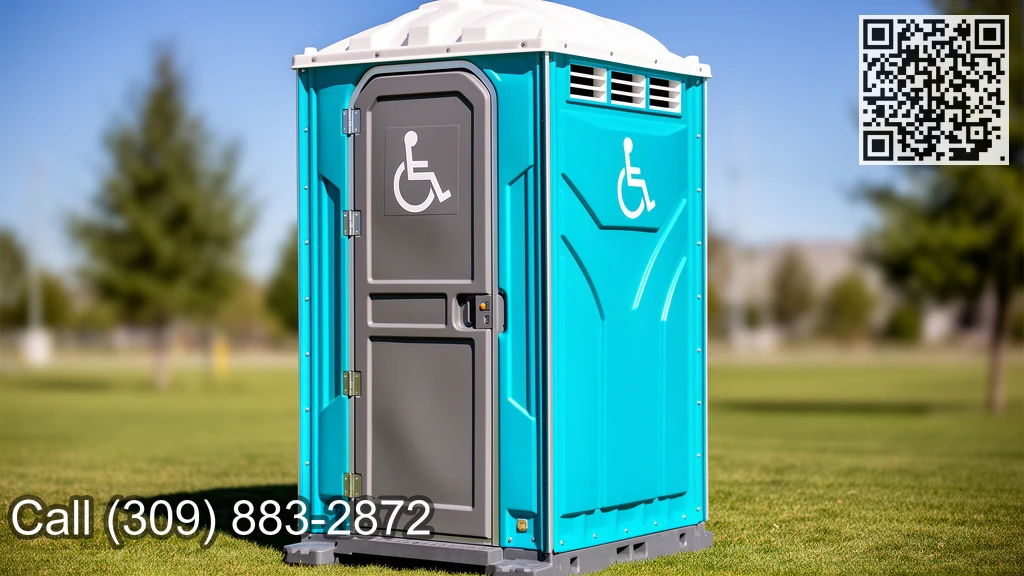
An ada easily accessible portable bathroom is not simply a wider shell with a sticker label on the door. The obtainable portable device has to meet relevant bathroom space technical demands. That consists of clearances at the fixture, transforming space, and door handling clearances, along with applicable grab bar and water storage room clearance rules.
Those are not ornamental upgrades. They are the dimensions and useful rooms that enable an individual to go into, transform, setting, transfer, and departure securely. When an obtainable unit is chosen appropriately, it is created around these technical demands. When it is picked thoughtlessly, the tag may be present while the interior usability drops short.
The system must also be understood the International Sign of Ease Of Access. This seems like a little factor up until you have actually enjoyed visitors scan a lengthy row of similar systems from a distance. Clear recognition stops confusion and conserves time. It also indicates, before an individual reaches the door, that the system was planned to be part of the obtainable experience instead of an afterthought.
There is additionally a tendency in table talk to utilize a mix of expressions such as ada certified easily accessible portable restrooms, ada certified mobile washrooms, and ada-compliant mobile restrooms mutually. That is fine in ordinary speech, however the real examination is not the phrase made use of in a quote demand. The test is whether the actual device and its placement please the ADA requirements. A shiny rental description is not a replacement for compliance.
Placement is where numerous certified devices fail
An available unit can be produced properly and still be severely positioned. This is just one of one of the most usual functional failures.
Portable easily accessible devices have to have an accessible course and easily accessible entrance. If ramps or touchdowns are needed, those elements additionally have to abide by ADA technical demands. That means you can not simply go down an ada compliant mobile bathroom anywhere the truck can dump it and assume the work is done. If a wheelchair customer can not reach it along an easily accessible route, or can not come close to the entry in a functional method, the unit may be present without being meaningfully available.
Think regarding what occurs on momentary websites. Ground conditions change. Rainfall creates ruts. Crushed rock changes. Suppliers request added area. Fence obtains moved. A route that looked appropriate at shipment can become hard by the time the general public arrives. Temporary arrangements need a final go through that deals with the easily accessible path as an excellent demand, not a box to examine throughout scheduling.
A few placement concerns are worthy of special interest:
- placing the easily accessible unit on a slope or unequal surface
- tucking the unit behind typical bathrooms so the method is obstructed
- creating a route that goes across mud, loosened gravel, or various other unpredictable ground
- adding a ramp or landing without confirming it meets ADA technological requirements
- locating the only available device much from the activity location offered by that cluster
These are not unique side situations. They happen constantly when positioning choices are made promptly or handed off without oversight. The repair is generally not dramatic. It is planning, dimension, and a readiness to book the best location, not the leftover one, for the ada mobile restroom.
Temporary events still count
One of the most consistent myths in occasion preparation is that short-term means much less managed. In my experience, people do not always say that out loud, yet they plan as if it held true. They assume a weekend break occasion, an eventually fundraising event, or a seasonal activation somehow gets more freedom than a permanent facility.
The Accessibility Board's analysis makes this factor clear for portable commode clusters: the easily accessible system need uses even at short-term occasions. Temporary duration does not erase the requirement for accessible hygiene. If anything, short-term events commonly require even more discipline because the atmosphere is much less predictable.
An exterior craft fair is a fine example. The organizer may be renting out all sanitation devices for just two days. Because absolutely nothing is permanent, every ease of access component depends upon active selections. Where will the financial institution of devices go. Exactly how will attendees reach it. Is the obtainable portable restroom component of the very same visitor path as everything else, or does it call for a detour around barriers and service lanes. Those inquiries are not additional. They are the work.
The exact same reasoning puts on pop up food occasions, road races, shows, and https://pristineportablesil.com/service-area-east-moline-il/ metropolitan celebrations. Momentary logistics are still logistics. The ADA requirements do not vanish because the event ends on Sunday night.
Why "accessible someplace" is not enough
I have actually noticed a pattern in website preparation conversations. A person states, "We have an ADA unit," particular, as though naming it settles the concern. Usually that device exists, however it might be connected to the wrong collection, put near a solution entrance rather than a guest course, or separated from the area where the public really spends time.
This is where the 5 percent guideline ends up being greater than a number. It pushes organizers to assume collection by cluster, not website broad in the abstract. If a venue has a number of bathroom groupings because the impact is large, ease of access needs to show up where the need appears. Otherwise people with specials needs are efficiently offered by a different map than everyone else.
That produces sensible burdens others do not deal with. A parent coming with an impaired member of the family might need to leave an activity early and take a trip further. A visitor may have to ask personnel for instructions when others can just follow the group. None of this is trivial. Accessibility to washrooms forms whether individuals stay, participate, and feel welcome.
When you hear expressions like ada handicap obtainable portable washroom in rental conversations, what individuals typically indicate is simple: they desire a device that can in fact be utilized by individuals who need easily accessible features. The language might differ, however the preparation obligation remains the same. Place easily accessible systems where they offer people equitably, not simply visibly.
The building and construction site distinction
There is one location where people get perplexed due to the fact that they have actually heard partial details. The ADA standards differentiate mobile commode systems at construction sites utilized solely by building and construction personnel. Under the mentioned 1991 criterion, those devices are excluded from the mobile commode access scoping requirement.
That slim difference does not erase the ease of access demand for basic portable toilet leasings. It does not imply every jobsite is exempt in every scenario, and it absolutely does not imply public event leasings can neglect access. It just means there is a details, restricted difference in the requirements that relates to building and construction website devices made use of just by building personnel.
This issues because exception language tends to spread by word of mouth quicker than context does. A contractor listens to "construction sites are exempt," and six conversations later on someone intending a public street fair presumes the same policy applies. It does not.
If the mobile bathrooms become part of a general public occasion or public facing setup, you need to not depend on that construction specific difference as cover. The safer and extra precise approach is to return to the actual scoping and technological demands that put on easily accessible mobile units.
Choosing the right location on a genuine site
The best positioning decisions usually happen prior to the vehicle arrives. Once the unit is on the ground, moving it may be feasible, yet it becomes harder, slower, and more expensive. Excellent preparation starts with asking where people will really take a trip, queue, gather, and rest.
I like to think of available placement as an issue of self-respect as high as compliance. If a bank of standard units rests straight off the major pedestrian route, but the accessible mobile commode is sent out to the edge of the lot due to the fact that it is larger and "harder to fit," the message is noticeable. The larger impact should trigger earlier planning, not exile.
There is additionally a subtle design issue that comes up usually. In some cases the simplest discharging area is not the most effective public approach area. Delivery benefit matters, yet it should not manage the final guest experience. An unit that is simple to drop off yet tough to reach is a poor trade.
A functional review before last positioning generally aids:
- identify each cluster, not just the overall site count
- confirm at least 5 percent of solitary individual units in each collection are accessible
- verify the obtainable path and entrance per available unit
- check whether any kind of ramp or touchdown needed should satisfy ADA technological requirements
- make sure the unit is plainly marked with the International Sign of Accessibility
That short review catches numerous troubles while they are still simple to take care of. It likewise aids when multiple teams are entailed, such as an event organizer, a rental business, a site manager, and a facilities planner. Accessibility voids commonly occur in handoffs.
What tenants must ask, and what providers must answer
A consumer setting up an ada mobile bathroom rental does not require to be a legal representative or code specialist, however they do require clear answers. Vague guarantees are common in rapid relocating rentals. "Yes, we have ADA systems" is a start, not the finish.
The far better conversation seems a lot more particular. Which units in which clusters will come. How will those units be noted. What route will participants utilize to reach them. If a ramp or landing is included, has any person inspected those conditions versus ADA technological needs. Is the accessible device positioned with the same thought provided to comfort and presence as the standard units.
Providers who operate in this space regularly often tend to recognize that a certified device can still be inadequately deployed. Consumers must anticipate that recognition. It is not quibbling. It is the distinction in between leasing devices and providing access.
For larger events, it also aids to review placement soon before opening. Temporary websites are liquid. Barricades relocate. Utilities show up. Vendor cubicles expand. A last minute shift can accidentally block the route to an ada compliant portable commode even if the original positioning was sound. Ease of access needs one final collection of eyes nevertheless the various other pieces have settled.
Compliance is happening in a more comprehensive environment
Accessibility enforcement does not exist in isolation. One relevant fad is that ADA compliance is being implemented in a broader atmosphere throughout markets. The Department of Justice issued support in April 2026 that extended the due date for state and local government internet and mobile access regulations to April 26, 2027 for bigger entities. That growth has to do with electronic accessibility, not mobile bathrooms, yet it reflects something crucial: ADA compliance remains energetic, noticeable, and very much on the radar.
Why reference that in a conversation concerning mobile units? Due to the fact that it shows that accessibility is not fading right into the background as a low priority information. Organizations are being asked, in several contexts, to take accessibility seriously and operationalize it. Physical access at temporary websites belongs because exact same culture of responsibility.
For communities, public agencies, event promoters, and residential property managers, this wider setting must be a cue to tighten up the essentials. If your team is currently thinking thoroughly regarding digital accessibility, public interaction, and inclusive services, the same self-control should apply to sanitation preparation. An ada certified portable toilet is one piece of a bigger pattern: ensuring individuals can in fact participate.
The human side of placement decisions
The language of standards can seem completely dry, but the experience is not. When an easily accessible device is placed correctly, many people barely discover the planning behind it. That is an excellent outcome. The visitor who requires it can locate it, reach it, enter it, use it, and carry on with their day.
When placement fails, the problem lands on the person who currently has the least margins for inconvenience. They are the one searching much longer, traveling further, or requesting help in a setting where every person else is relocating easily. That is why empathy belongs in conformity job. It develops judgment.
There is no merit in making accessibility made complex when the regulating concepts are really straightforward. Supply the required variety of accessible devices in each cluster. Usage devices that fulfill the suitable toilet room technological needs. Mark them with the International Symbol of Availability. Make certain the accessible path and entrance are truly accessible, and make certain any kind of required ramps or landings satisfy ADA technical requirements.
That is the heart of ada portable toilet requirements as they associate with placement. Not symbolic access, actual accessibility. Not an unit parked somewhere on website, an unit individuals can reasonably and separately usage. When organizers deal with those details as necessary as opposed to optional, obtainable portable restrooms stop being an afterthought and begin doing what they are meant to do: serving the general public with dignity.
 Ask ChatGPT
 Ask Grok
 Ask Perplexity
 Ask Claude
 Ask Google AI
 Ask You